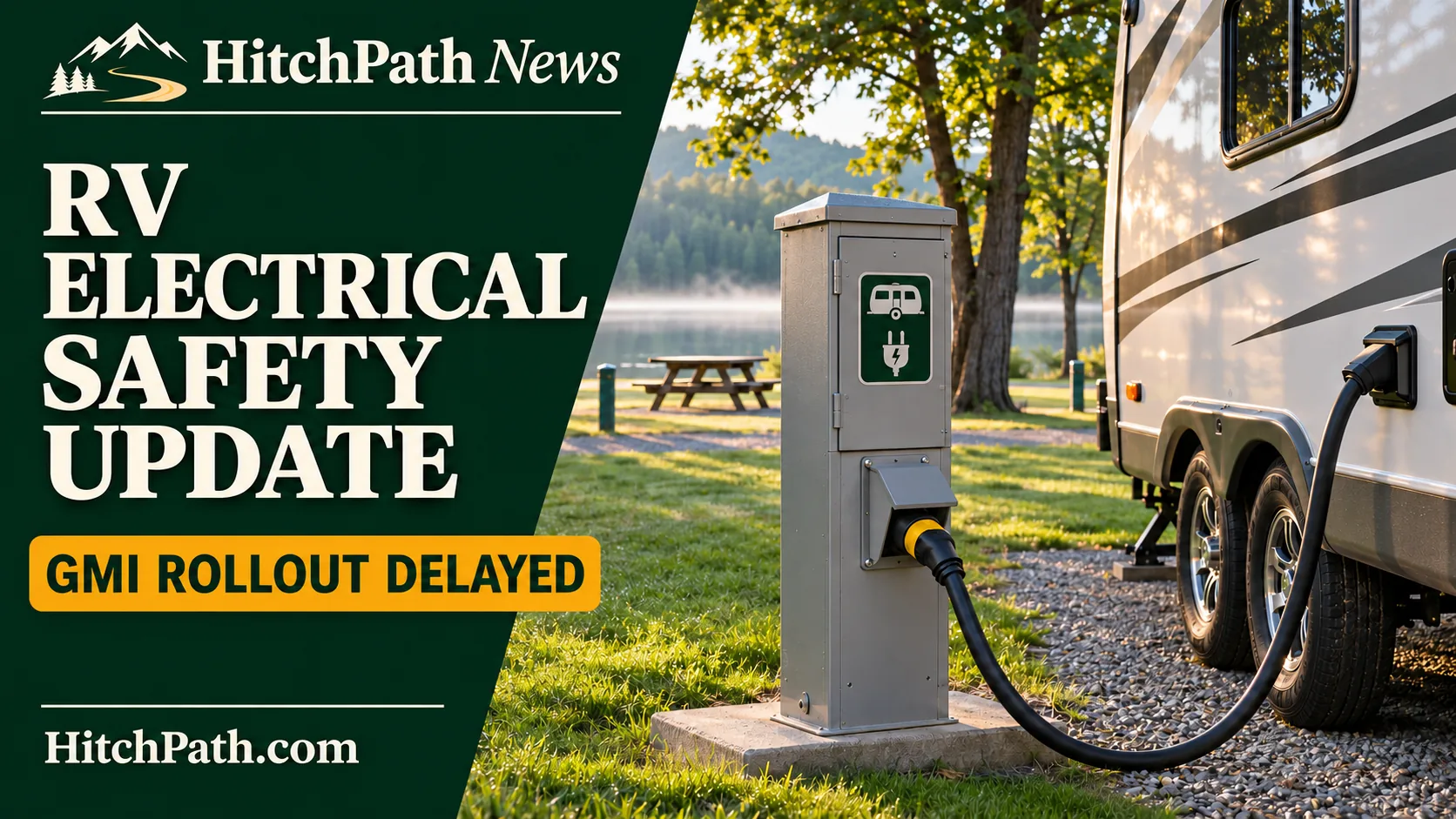
The RV Industry Association announced November 12 that it is postponing its implementation and enforcement timetable for grounding monitor interrupters, or GMIs, in new RVs. The previous plan tied mandatory enforcement to model year 2028 production.
RVIA says fully developed, listed devices are not yet sufficiently available for manufacturers to complete the necessary validation. Its board plans to reconsider the schedule at its February meeting. The announcement does not establish a replacement deadline.
This is a change to RVIA’s rollout timetable. It should not be read as a blanket suspension of electrical codes or local requirements.
Why a GMI matters at a campsite
RVIA explains that a GMI checks the ground connection before allowing shore power into an RV and disconnects power if that connection is lost. The protection is intended to address dangerous conditions in which an RV’s exterior or frame becomes energized.
The technology also makes campground electrical infrastructure part of the discussion: a grounding problem can prevent a properly functioning GMI-equipped RV from accepting power. That does not automatically mean the RV itself is defective.
What owners should do with this news
HitchPath’s practical advice is to ask about the actual equipment on the specific RV you are buying. Do not assume a model-year label guarantees a particular device while the implementation schedule is being revised. Request the manufacturer’s documentation and operating guidance.
The delay is not a reason to disregard an electrical warning. Do not bypass a protective device to make a connection work. Have suspected electrical problems evaluated by a qualified professional.
What campground teams should prepare for
RVIA’s technical guidance recommends an electrical-system assessment by a licensed electrician. Hosts and front-desk employees can help by recording the site number, the guest’s reported problem and any displayed warning, then following the park’s escalation procedure. They should not be expected to diagnose or repair energized equipment without the appropriate qualifications.
For workampers considering a maintenance role, ask who handles electrical repairs and how unsafe sites are taken out of service. Clarifying that responsibility before accepting a position is useful regardless of when the new equipment becomes widespread.
This is a follow-up to HitchPath’s earlier campground electrical-change article. For the rollout date, use the newer November 12 announcement rather than the earlier timetable still appearing in some background resources.
Sources checked November 16, 2026: RVIA’s November 12 announcement and RVIA’s GMI technical resource.