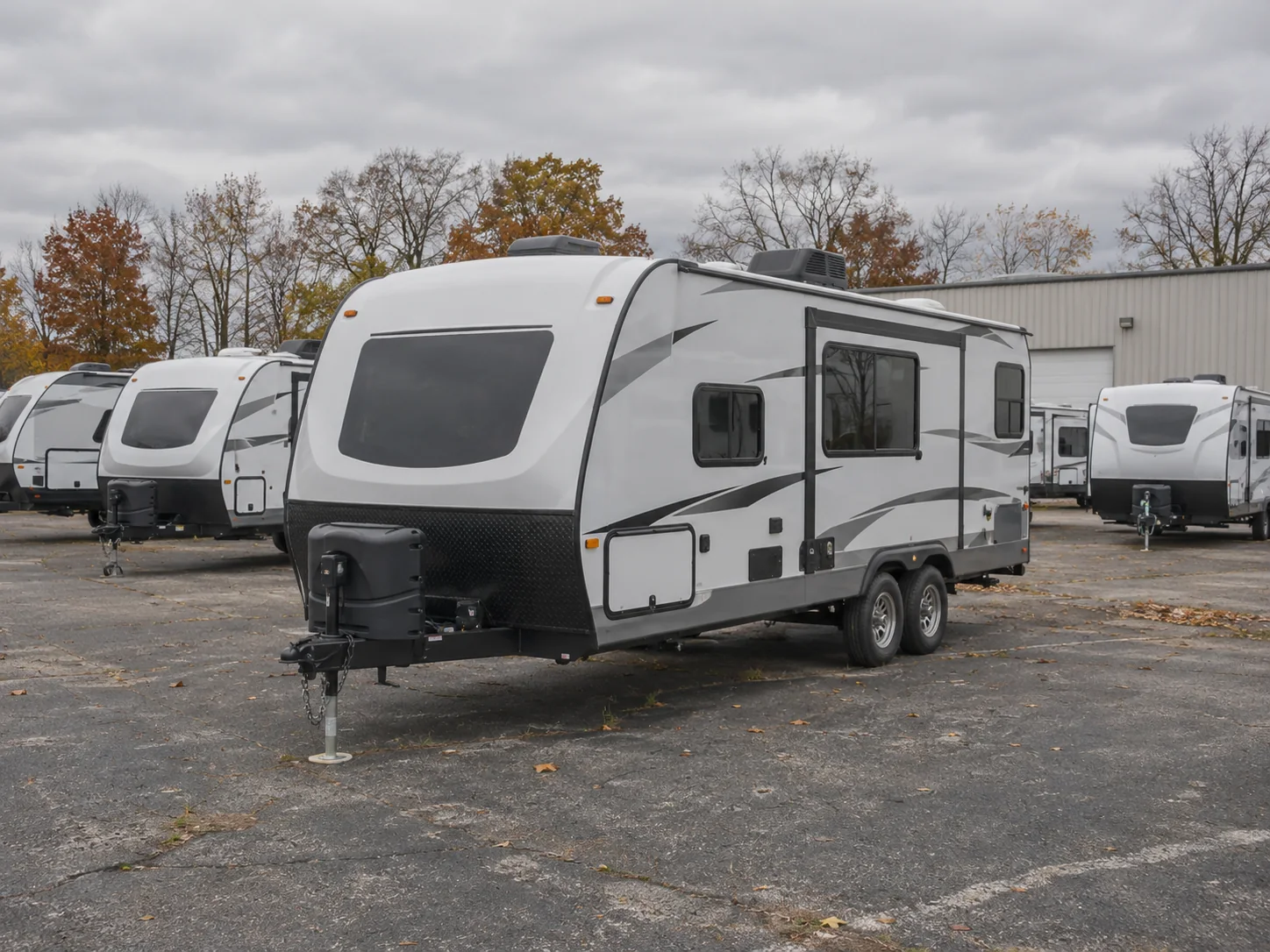
RV manufacturers shipped 23,309 units in October 2026, down 22.9% from a year earlier, according to the RV Industry Association’s October report. Through October, shipments were down 14.7% for the year.
For people whose home and job plans revolve around an RV, a decline that large deserves attention. But understanding what the report measures is more useful than assuming it describes every part of life on the road.
Where the decline showed up
RVIA reported 20,393 towable shipments, down 24.6%, and 2,916 motorhomes, down 8.5%, compared with October 2025. Type B camper vans moved in the opposite direction: 828 shipments, up 23.6%. The segment differences show why a single industry headline cannot describe every type of RV.
RVBusiness covered the results on November 25. The figures describe October activity, not sales made on the day the news appeared.
Shipments are one part of the RV economy
Think of three separate questions: how many new RVs manufacturers ship, how many customers buy, and how often owners use them. A shipment report answers the first. It does not directly count a family's weekend reservations or an employer's open positions.
An RV already owned can support many trips without generating another new-unit shipment. Likewise, a campground can have staffing needs that depend on its operating season, maintenance schedule and mix of services. The shipment figures alone cannot tell an applicant whether a particular park will offer more or fewer hours.
HitchPath’s interpretation is that this report is useful background for asking better questions. It is not a forecast of your next employer’s staffing plan.
What workampers should ask before committing
When comparing workamping opportunities, focus on the details that determine whether a season works for your household:
- How many hours should I expect? Ask whether the stated hours are guaranteed, an estimate or a maximum during busy weeks.
- What happens when the park is quiet? Clarify whether duties shift to maintenance and projects, or whether scheduled hours can be reduced.
- Are the start and end dates firm? Ask how the employer handles delayed openings or an early end to the season.
- How is the campsite tied to the role? Confirm what happens to the site if hours change or the assignment ends.
- What will I actually do? A clear description of front-desk, cleaning, grounds or hosting duties is more useful than a broad promise to help wherever needed.
Request the agreed terms in writing. For a couple, confirm whether the quoted hours apply to each person or to both people combined.
A simple planning example
Imagine an employer advertises approximately 25 paid hours a week. Before building a travel plan around that income, ask whether a slower week could mean 15 hours, whether any work is exchanged for the campsite and how much notice you would receive.
Those are hypothetical figures, not findings from the RVIA report. Their purpose is to show why the employment agreement matters more to an individual budget than a national shipment percentage.
What campground owners can make clearer
For employers preparing a seasonal listing, explain the work schedule, campsite arrangement and any conditions that can change the assignment. If hours vary, describe the expected range and how scheduling decisions are made. Applicants can then judge the opportunity on its actual terms.
A transparent listing also gives both sides a useful starting point for an interview: what must get done, when it must happen and what the worker receives in return.
How to use this news
Read the shipment report as a signal about new RV supply, then evaluate work opportunities locally. Compare paid workamping jobs and camp host roles by duties, hours, location and the full offer.
For a job seeker, the next useful step is a specific conversation with an employer—not a change of plans based on a headline alone.
Data note: RVIA’s published summary and table show slightly different year-to-date unit totals. This article uses the consistent percentage decline and October figures, avoiding the conflicting cumulative count. Practical guidance and interpretation are HitchPath’s.