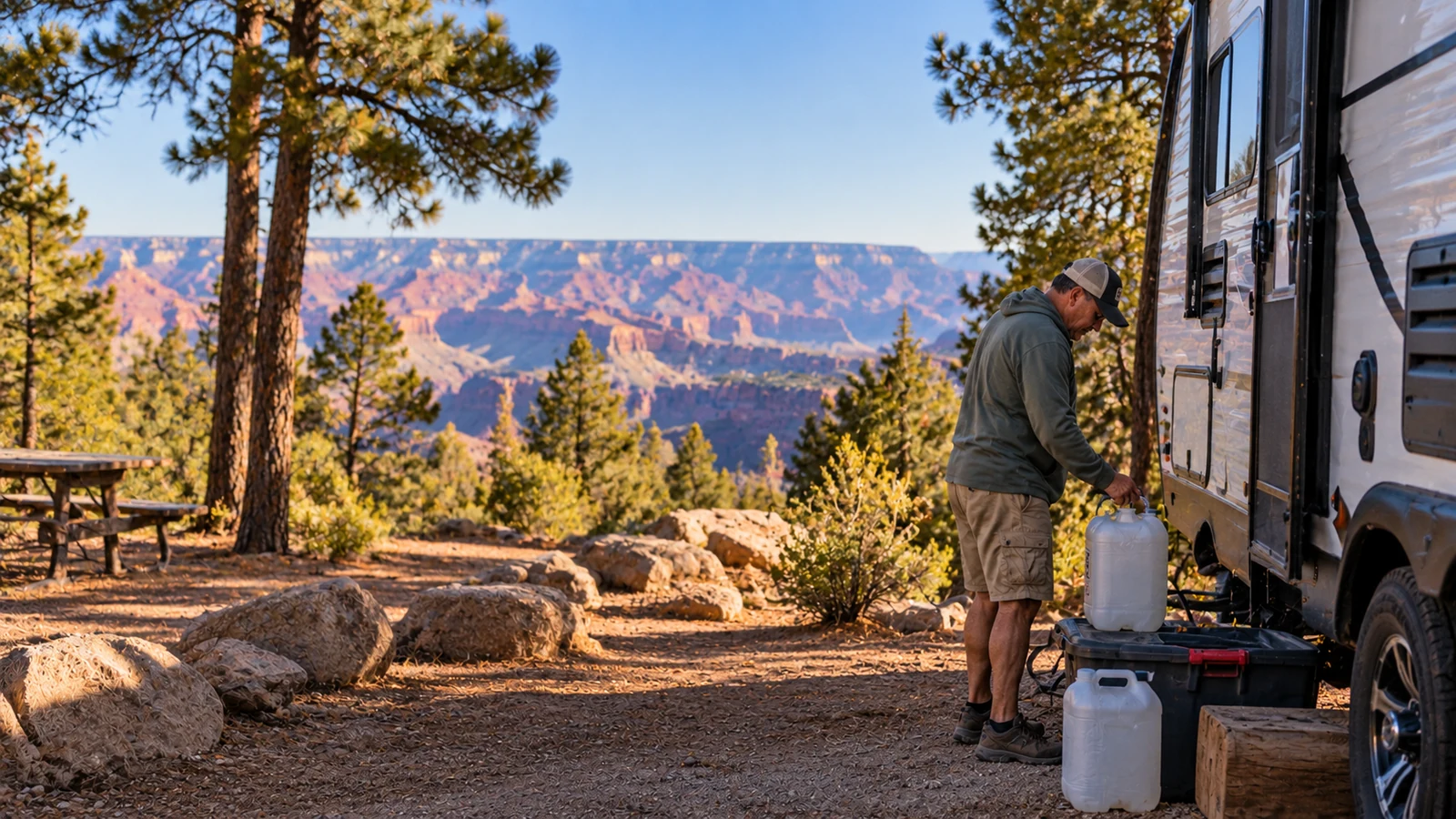
Grand Canyon National Park remains open to visitors, but arriving with an RV this October requires more planning than usual. Trailer Village RV Campground is closed, two South Rim campgrounds are operating with dry camping only, and restrictions on water and overnight services remain in place while the park works to restore a critical water system.
The distinction matters for travelers making reservations or planning a fall route. A park can be open for scenic overlooks and day visits while many of the services RVers count on — hookups, showers, laundry and reliable water access — are unavailable.
The National Park Service's current operations update still lists Stage 4 water restrictions for the South Rim. The Arizona Office of Tourism's October 9 update likewise says that South Rim day access is available, but overnight operations remain limited.
Which Grand Canyon campgrounds are affected?
Trailer Village RV Campground: The developed RV campground on the South Rim is closed until further notice because of the water emergency. Its normal full-hookup accommodations should not be treated as available simply because the property is still shown in older directories or travel guides.
Mather Campground: Mather remains open, but the park says it is dry camping only under the current restrictions. It has no regular RV hookups. The nearby Camper Services building, including its coin-operated showers and laundry facilities, is closed until further notice. Reservations are recommended for the fall season, and the park's current page provides further booking details.
Desert View Campground: Desert View is open for its seasonal operating period, currently posted through October 18, 2026, but it is also dry camping only. The park says advanced reservations are required. This campground does not offer hookups even during normal operations.
The North Rim campground has separate seasonal and water limitations, so visitors should not assume that conditions on one rim match those on the other.
All of these details can change as restoration continues. The park's live operations page should take precedence over cached reservation descriptions and old articles.
How did the water emergency happen?
The National Park Service says a flash flood on August 29, 2026 damaged a water intake pump and other infrastructure in Bright Angel Canyon. The flooding also severely damaged parts of the older Transcanyon Waterline, worsening a challenging water-supply situation during a long-running replacement project.
This is more than a broken spigot at one campground. Water supports residences, visitor operations, concession businesses, public facilities and emergency needs. Until the park can safely replenish its storage and distribution system, conservation measures affect the entire visitor experience.
According to the park's water-restoration announcement, officials projected that pumping could resume around November 16, followed by the start of water distribution to residents by Thanksgiving. The park stressed that those dates were tentative. It also estimated that filling the storage tanks completely could take approximately 45 days after pumping begins.
That timeline is important: a projected restart of pumping is not a scheduled reopening date for Trailer Village or a guarantee that every campground service will resume by Thanksgiving.
What changed in the October updates?
The park's community recovery page says that as of October 4, crews had begun hauling upward of 200,000 gallons of water per day into the community's system. An October 8 community update also described potable-water distribution and service adjustments for park residents.
Those emergency distribution arrangements are not a promise of routine campground water service for travelers. Residents and visitors may use different designated supplies and facilities, and some temporary collection points can be removed as the system changes. The park asks visitors to bring drinking water when possible and use current public guidance rather than relying on a location mentioned in an old update.
The October 9 Arizona tourism bulletin reinforced that day visitors can continue to enjoy South Rim viewpoints and certain trails, while encouraging them to bring water and be prepared for limited facilities.
What RVers should do before making the drive
If you are traveling with a motorhome or trailer, check the practical details before treating a booking confirmation as your entire plan.
First, confirm that the specific campground is operating and that your site type matches your equipment. Dry camping means you should not expect an on-site water hookup, power pedestal or sewer connection unless the operator explicitly says otherwise. Arrive with adequate potable water and enough capacity in your holding tanks for the stay.
Second, plan your showers, laundry and dumping arrangements ahead of time. The normal Camper Services building is currently unavailable, and a closed full-hookup campground cannot serve as an alternative. Travelers may need to organize some services in a gateway community before entering the park.
Third, check fire restrictions. The park currently prohibits outdoor wood fires at Mather and Desert View. Even if you have a reservation, the permitted cooking and fire arrangements may differ from what you used on a previous visit.
Finally, make sure your travel companions understand the difference between an open park and open overnight services. Someone planning a scenic day stop has different needs from someone expecting a week-long full-hookup stay.
The impact reaches campground workers, too
The changes are also significant for people who work in and around RV tourism. Campground hosts, front-desk staff, concession employees and nearby RV parks may face questions about relocated reservations, dry-camping rules, water availability and altered arrival plans.
The most useful thing staff can do is share accurate, current information. Don't promise a reopening date that the park has not announced. Don't direct guests to a temporary water supply without checking whether it is intended for public visitor use. And when electrical, sanitation or water-system questions go beyond staff authority, direct them to qualified park personnel.
The park's recovery work is ongoing, and the restrictions are understandably inconvenient. But the canyon remains accessible in important ways. RVers can still have a worthwhile visit by preparing for the services that are genuinely available today rather than the ones they remember from a previous trip.
Check the official Grand Canyon operations page again immediately before arrival. For other public-lands workamping opportunities, HitchPath's job board can help you explore different locations while conditions change.