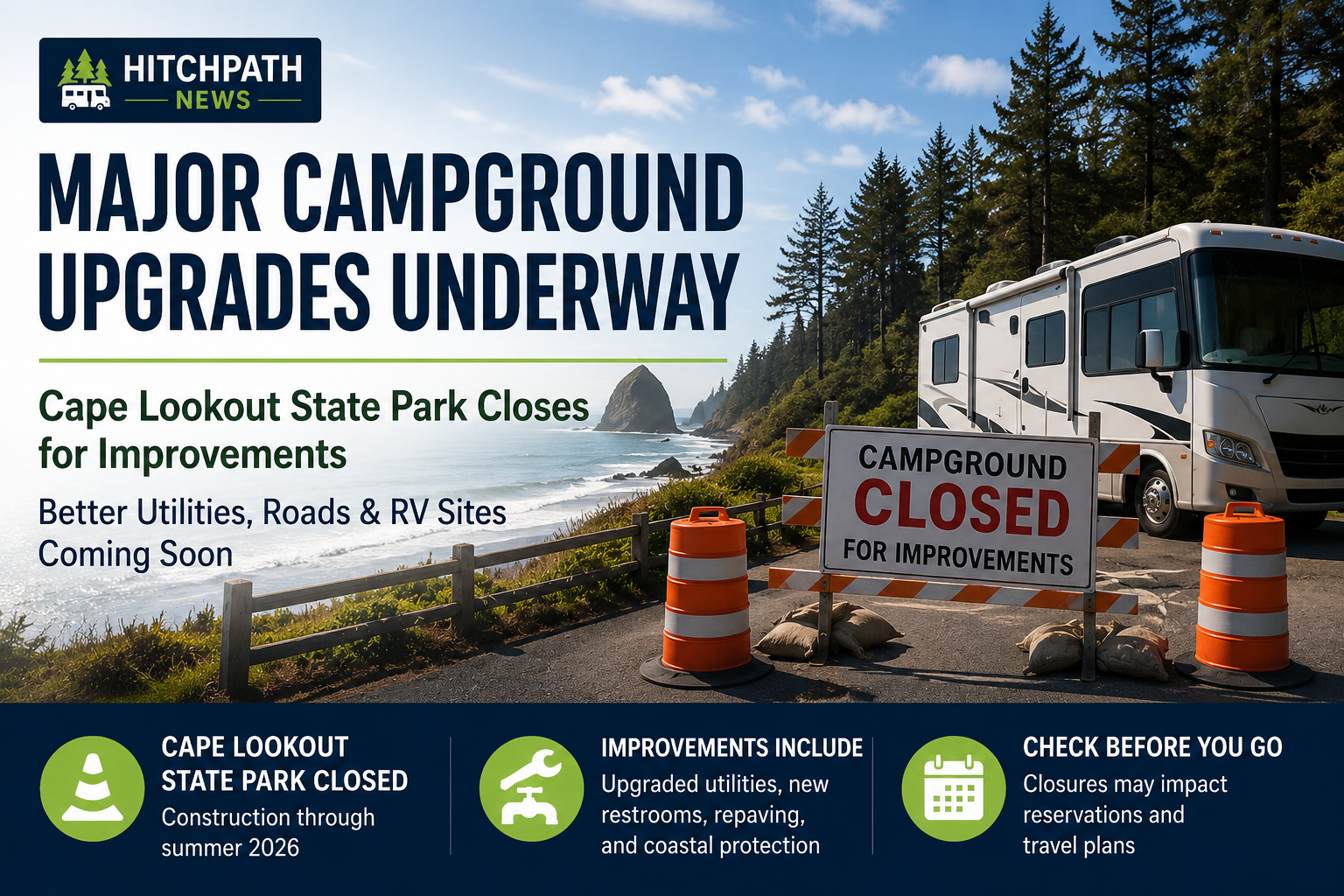
Cape Lookout State Park on the northern Oregon coast closed its campground and day-use area on August 3, 2026, as a major construction project moved forward.
The project will affect one of Oregon’s best-known coastal camping destinations, located on a sand spit between Netarts Bay and the Pacific Ocean near Tillamook. The work is being funded through Oregon-issued general-obligation bonds.
For RV travelers, tent campers and seasonal workers, the closure is an important reminder to verify current park conditions before beginning a trip.
What Is Being Upgraded at Cape Lookout?
The Cape Lookout project includes several major infrastructure improvements.
Oregon State Parks says crews will:
Upgrade water and electrical utilities in C and D loops Replace the D Loop restroom and shower building Repave campsites and campground roads in D Loop Reconfigure and repave the day-use parking lot Reinforce the foredune protecting the campground from the ocean
The foredune and stone revetment are especially important because they help stabilize the area between the campground and the Pacific Ocean.
These are not minor cosmetic repairs. They involve the systems campers depend on for water, electricity, sanitation, road access and protection from coastal erosion.
Why a Full Campground Closure Is Necessary
Many public campgrounds were built decades ago, when RVs were smaller and required considerably less electricity.
Today’s motorhomes, fifth wheels and travel trailers may use multiple air conditioners, residential refrigerators, electric water heaters, televisions and internet equipment. Older electrical systems were not necessarily designed to support that demand throughout an entire campground loop.
Water lines, roads, restrooms and parking areas also deteriorate over time. When several major systems need to be replaced at once, closing a campground can be safer and more efficient than attempting to work around occupied campsites.
Cape Lookout normally offers a large mix of accommodations, including full-hookup campsites, tent sites, yurts, cabins and group camping. Closing the property therefore removes a significant amount of camping inventory from the Oregon coast.
Travelers Should Check Before Leaving Home
Oregon State Parks says the construction closure may be adjusted as the project timeline becomes clearer. The current park notice also says work is expected to continue through summer 2026.
Travelers should not depend solely on an old reservation confirmation, map listing or travel article.
Before leaving, check:
The official park page Current Oregon State Parks notices The status of any existing reservation Road conditions near the park Availability at nearby campgrounds Refund or reservation-transfer instructions
Campers should also avoid assuming that nearby Oregon coast campgrounds will have last-minute openings. Coastal sites can fill quickly, especially during summer weekends.
What This Means for Workampers
Construction closures can also affect campground hosts and seasonal employees.
Anyone assigned to work at a park undergoing renovations should contact the park or employer directly and ask:
Is the original reporting date still correct? Is the assigned host site available? Will water, electricity and sewer service be operating? Has the position moved to another campground? Have the duties or work schedule changed? Will compensation, volunteer hours or campsite benefits remain the same? Is there a new arrival or check-in location?
A campground closure does not always mean every job or volunteer assignment has been eliminated. Hosts may be moved to another property, given a later arrival date or assigned to support a different area.
However, workampers should receive those changes directly from the employer rather than relying on assumptions or social-media comments.
Better Infrastructure Can Improve Future Hosting
Although closures create short-term inconvenience, upgraded utilities and roads can make future campground operations safer and more dependable.
Improved electrical systems may reduce outages. Rebuilt water lines can help prevent leaks and service interruptions. New pavement can make it easier for larger RVs to enter and position safely.
Updated restrooms and showers can also reduce maintenance problems while improving the guest experience.
Once a major project is completed, campgrounds may need seasonal help with reopening, guest services, groundskeeping, maintenance and campground operations. Workampers should wait for an official job posting before assuming new positions are available.
A Larger Issue for Public Campgrounds
Cape Lookout’s closure reflects a challenge facing public campgrounds across the country.
Many parks are trying to maintain aging infrastructure while serving larger RVs and greater electrical demands. Coastal parks face the additional pressures of erosion, storms, salt exposure and changing shoreline conditions.
That can lead to temporary closures, fewer available campsites and changes to seasonal staffing. It can also produce safer, more modern campgrounds once projects are completed.
For campers and workampers, the most important step is simple: check directly with the managing agency before traveling.
Cape Lookout’s improvements may cause disruption now, but the long-term goal is a campground with better utilities, improved roads, modern facilities and stronger protection from the Pacific Ocean.
Source
Oregon Parks and Recreation Department, Cape Lookout State Park construction notice.