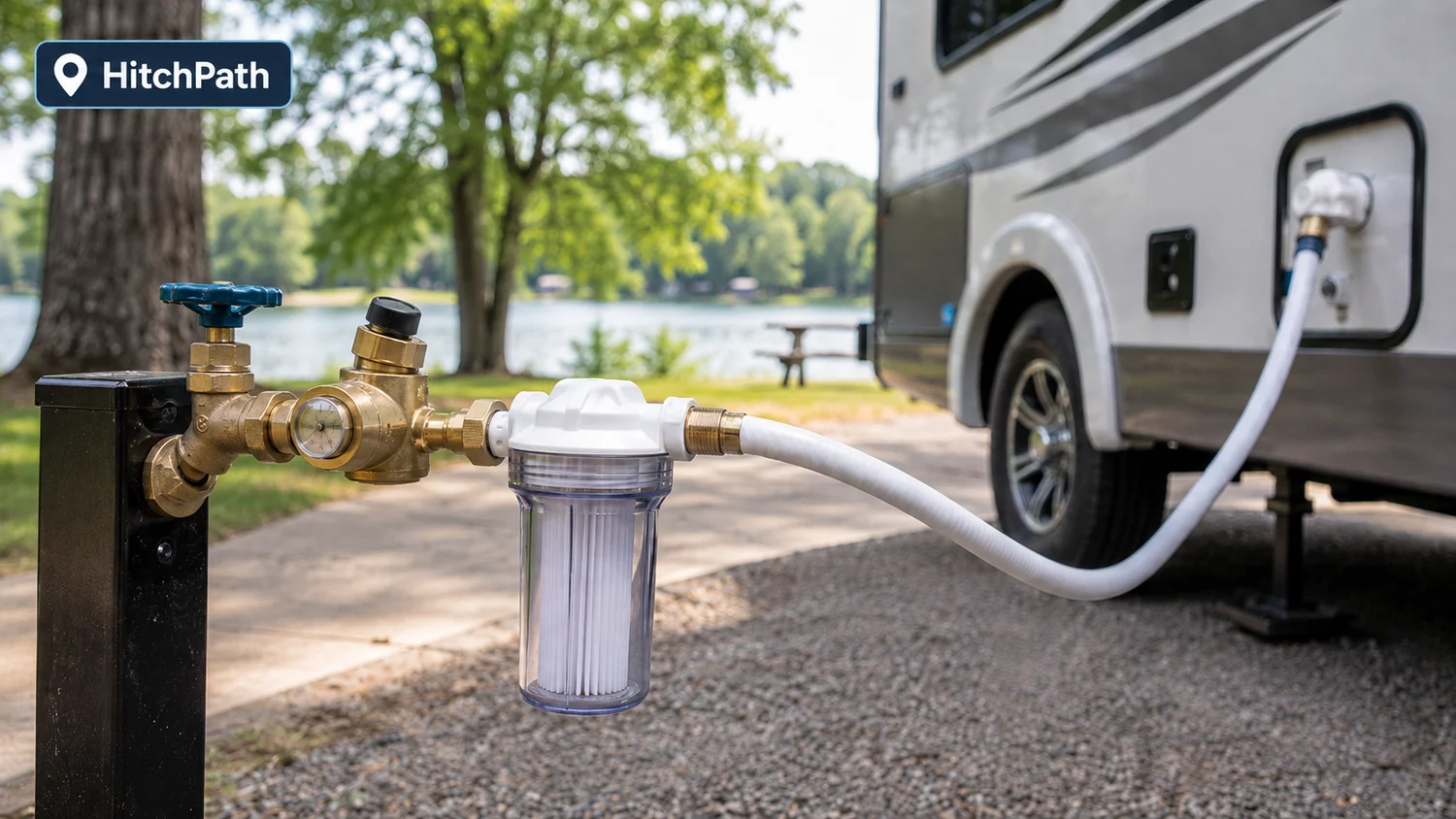
Campground water pressure can vary widely, and a sudden surge may put stress on your RV’s plumbing, fittings, and water lines. One of the simplest ways to reduce that risk is to attach an RV water-pressure regulator directly to the campground spigot before connecting your filter and drinking-water hose. Start by briefly flushing the spigot, then install the regulator, attach the filter, and connect the potable-water hose to your RV. This setup helps keep incoming water pressure steadier and can reduce the chance of leaks or damaged fittings. A regulator with a built-in gauge also lets you monitor pressure at a glance. Keep the regulator stored with your freshwater equipment so it becomes part of your normal campsite setup. It only takes a few extra seconds, but it can help protect your RV from an expensive plumbing problem. Always check your RV owner’s manual for the recommended pressure range and inspect hoses and fittings regularly for wear.
The One RV Hookup Hack That Can Prevent Water Damage
HitchPath Editorial Team · 2026-08-07
Quick Answer
Attach an RV water-pressure regulator directly to the campground spigot before connecting your filter and drinking-water hose. It helps keep incoming water pressure steadier and may reduce stress on your RV’s plumbing, fittings, and water lines.
Key Takeaways
- Install the regulator directly on the campground spigot.
- Flush the spigot before connecting your equipment.
- Connect the filter and potable-water hose after the regulator.
- A built-in gauge makes pressure easier to monitor.
- Follow the recommended pressure range in your RV owner’s manual.
Frequently Asked Questions
Where should an RV water-pressure regulator be installed?
Attach it directly to the campground water spigot before connecting the filter and drinking-water hose.
Do I still need a regulator if I use a water filter?
Yes. A filter improves water quality, while a regulator helps control incoming water pressure. They serve different purposes.
Should I use a regulator with a gauge?
A gauge is helpful because it allows you to monitor campground water pressure and notice unusual changes.