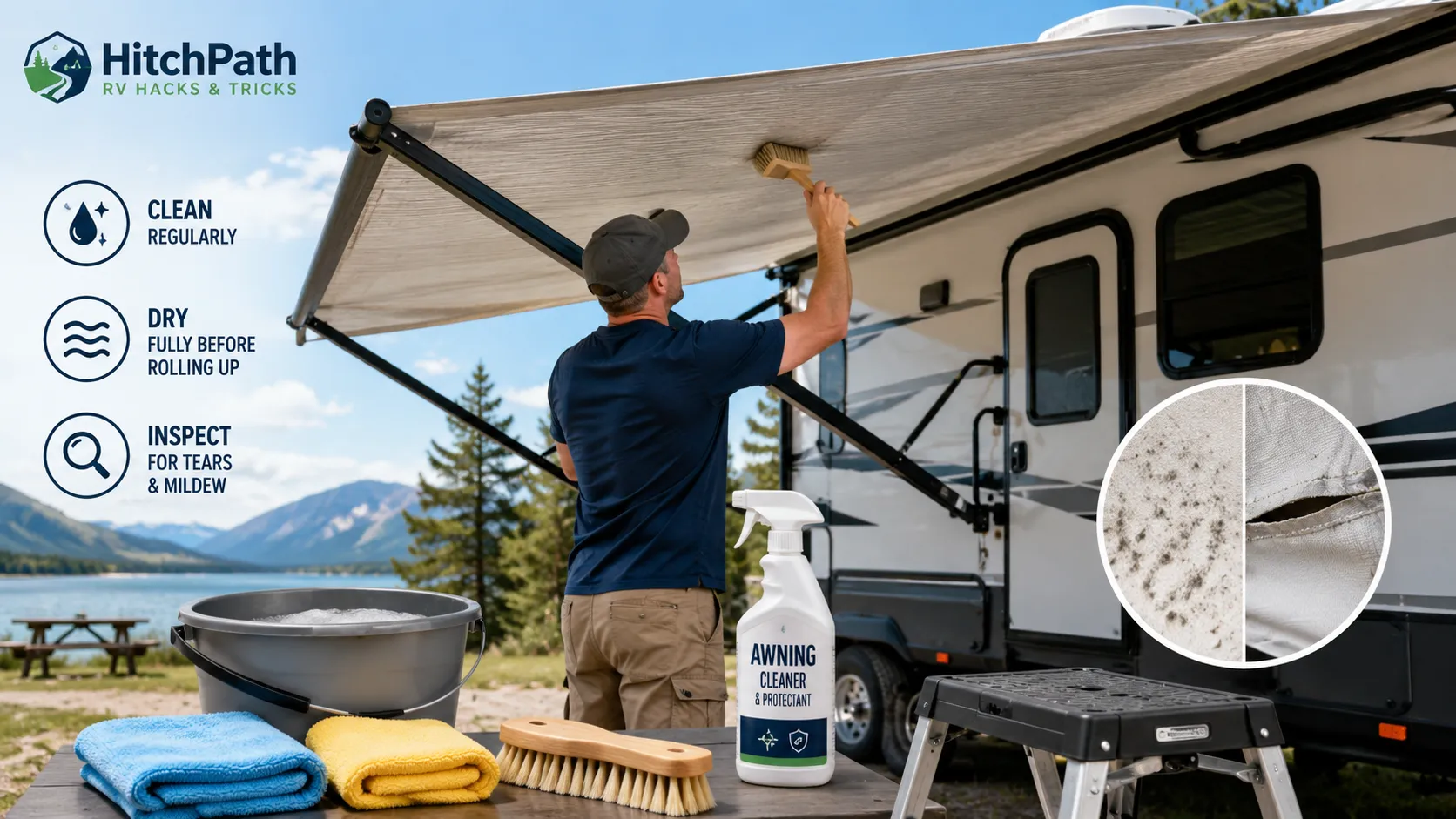
Your RV awning can spend years exposed to sun, rain, pollen, dirt, wind, tree sap, bird droppings, and campground debris. A little preventive maintenance can make a big difference in how long the fabric, seams, and hardware last.
One of the biggest mistakes RV owners make is rolling up an awning while it is still wet or dirty. Trapped moisture and debris can encourage mildew, staining, odors, and deterioration. Awning manufacturers recommend allowing the fabric to dry thoroughly before retracting it.
1. Never Store Your Awning Wet
If you remember only one awning-care rule, make it this one.
After rain or washing, extend the awning and allow it to air-dry completely before storing it for an extended period. If you have to retract it wet because you're leaving the campground, reopen it as soon as practical and let it dry.
Moisture trapped inside a rolled awning creates conditions where mildew and staining can develop.
2. Clean Dirt Off Before It Becomes Embedded
You don't necessarily need to deep-clean your awning every time you camp.
Regularly rinse away pollen, dust, leaves, and campground debris before they work their way into the fabric.
For normal cleaning, start with clean water and a mild soap or an awning cleaner approved for your particular fabric. Gently scrub the material with a soft brush or sponge, rinse thoroughly, and let it air-dry.
Avoid abrasive cleaners and pressure washers unless your awning manufacturer specifically says they are safe.
3. Know Whether You Have Vinyl or Acrylic Fabric
Not every RV awning should be cleaned exactly the same way.
Two common awning materials are vinyl and acrylic. Manufacturer care instructions can differ depending on the fabric.
Before using strong cleaners, mildew removers, protectants, or bleach, check the manual for your specific awning. Some manufacturers allow particular diluted cleaning mixtures, while others recommend avoiding harsh chemicals.
Don't assume a cleaning recipe you saw online is safe for every awning.
4. Inspect the Fabric Before Small Damage Becomes a Big Tear
Every few trips, extend the awning and look closely at the outer edges, stitching, seams, attachment points, roller area, corners, and anywhere the fabric contacts hardware.
A small hole or weakened seam can turn into a much larger tear when wind catches the awning.
Pay particular attention to the portion of fabric that remains exposed to the weather when the awning is rolled up. Sun and weather exposure can gradually weaken awning material.
Small damage may sometimes be repairable with an awning repair product designed for your particular fabric.
5. Don't Let Water Pool on the Awning
A large pocket of rainwater is heavy.
Water pooling can stretch or distort awning fabric and place additional load on the arms and mounting hardware.
If rain is expected, follow your awning manufacturer's instructions for pitching or retracting the awning.
If you're leaving the campground for an extended period, retracting the awning is usually safer than trusting the weather.
6. Wind Can Destroy an Awning Faster Than Dirt
Cleaning prevents gradual deterioration. Wind can cause damage in seconds.
A sudden campground gust can lift an extended awning and place enormous stress on the fabric and arms.
If strong winds or storms are approaching—or you're leaving your campsite and won't be there to react—retract the awning.
It only takes a few minutes to put the awning away, and it can prevent a very expensive repair.
7. Check the Arms, Joints and Fasteners Too
Fabric isn't the only part that needs attention.
Periodically inspect the arms, fasteners, brackets, roller, and moving joints for looseness, abnormal wear, bending, or anything that doesn't operate smoothly.
Some manufacturers permit specific lubricants on designated awning joints. That does not mean you should spray lubricant everywhere.
Follow the instructions for your exact awning and keep lubricant off the fabric unless the manufacturer specifically says otherwise.
What Should You Keep in Your RV Awning-Care Kit?
A small awning maintenance kit can make routine care much easier.
Useful items include:
- Soft-bristle cleaning brush or soft sponge mop
- Bucket
- Garden hose with a gentle spray nozzle
- Microfiber towels
- Mild soap or manufacturer-approved RV awning cleaner
- Spray bottle for spot cleaning
- Manufacturer-approved mildew or stain treatment
- RV awning repair tape or compatible fabric repair product
- Silicone or Teflon-type lubricant only where your awning manual permits it
- Small step stool for safe access where appropriate
- Gloves
- Your awning owner's manual or model information
Keeping these items together in your RV makes it much easier to deal with dirt, stains, or small problems before they become major repairs.
One Thing I Would Avoid
Don't automatically reach for a pressure washer or aggressive household chemicals.
And don't use bleach simply because you saw someone recommend it online. Cleaning instructions vary by manufacturer and fabric type.
Your awning owner's manual should always take priority over generic cleaning advice.
A Five-Minute Inspection Can Save an Expensive Repair
Before retracting your awning, make it a habit to look up.
Is it dry?
Are there leaves or branches sitting on it?
Is there water pooling?
Do you see a small tear?
Are the arms straight and operating normally?
That quick inspection can catch problems while they're still inexpensive and manageable.
An RV awning is one of those components that's easy to forget about until something goes wrong. Keeping it clean, dry, inspected, and protected from bad weather can help you get much more life out of it.