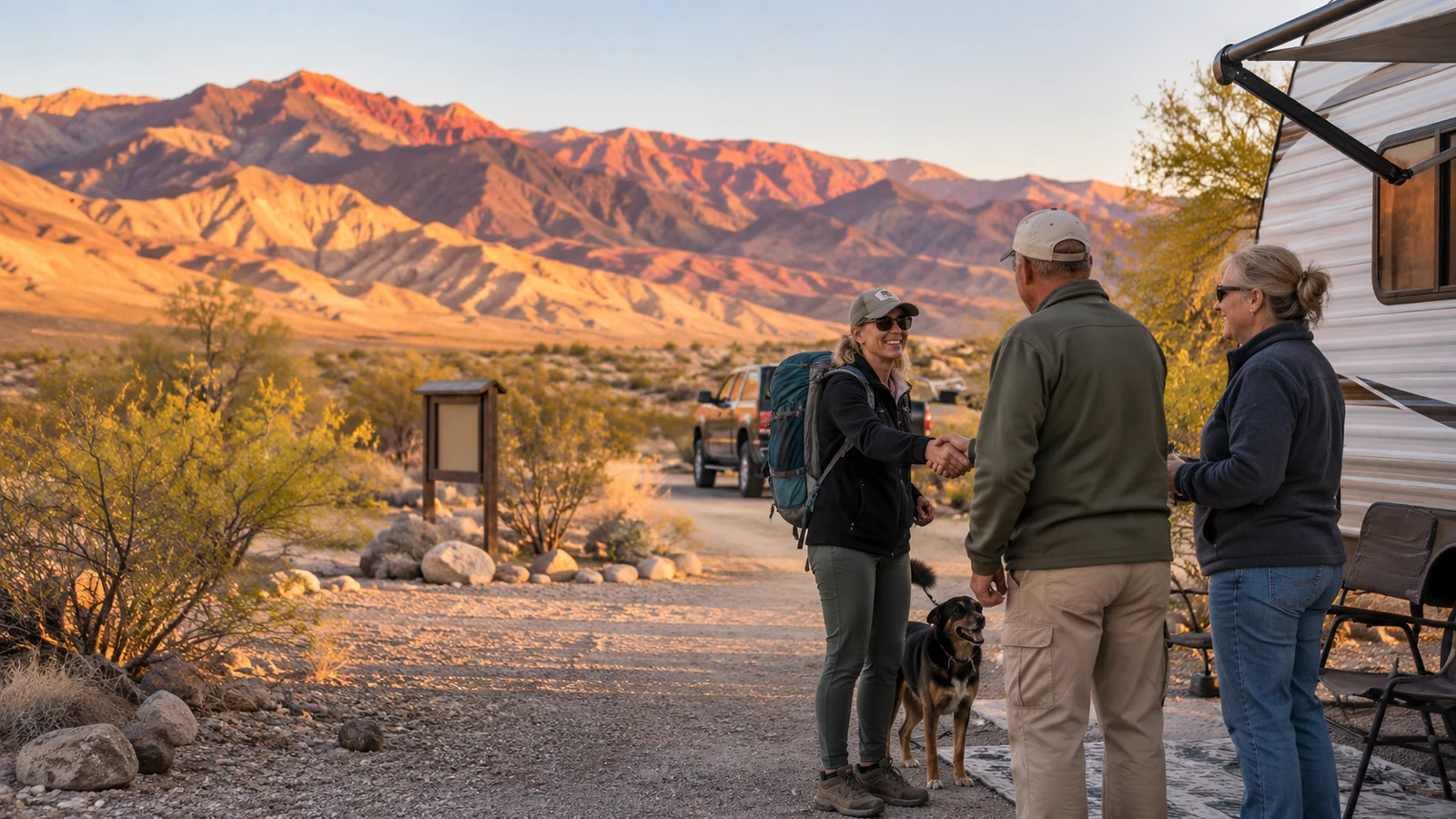
Death Valley's winter hosting season is arriving
When most northern campgrounds begin shutting down for the winter, Death Valley National Park is heading into one of its busiest volunteer-hosting periods. The National Park Service is recruiting campground hosts for fall 2026 and spring 2027, with assignments at five campgrounds and a work schedule that's more demanding than many people expect from a volunteer position.
For RVers considering a winter assignment in the desert, this is a chance to trade a traditional campsite reservation for a longer stay and a role helping visitors. But the park's published requirements deserve a careful read before anyone commits to three months away from home.
According to Death Valley National Park's volunteer recruitment page, the fall term runs from mid-October 2026 to mid-January 2027. The spring term follows from mid-January through mid-April 2027. Those are the advertised seasonal windows, not a promise that every specific campsite or assignment is still vacant.
Five campgrounds are included in the recruitment
The park identifies Furnace Creek, Sunset, Texas Spring, Stovepipe Wells and Mesquite Spring as locations recruiting volunteer campground hosts. They are all part of the same national park, but their settings and campground operations are not identical. A prospective volunteer should ask which campground the assignment would serve rather than assume they can select any of the five.
Death Valley also recruits other long-term volunteers for visitor centers, maintenance and research support. The park says most long-term fall and spring roles call for a commitment of at least three months. Its summer volunteer options are more limited, largely because of the area's extreme heat and constraints on housing.
For someone spending the winter in an RV, the season's timing may be the first attraction. These are not summer-only camp-host openings. They overlap with the months when many full-time travelers are trying to find a warm-weather place to settle rather than move every week.
What a Death Valley campground host actually does
This is not simply a position where someone sits outside an RV and answers occasional questions.
The National Park Service says hosts greet campers, help resolve visitor problems and provide customer service while wearing the Volunteer-in-Parks uniform on duty. They also make campground rounds to check fees and compliance with park rules, and help with light maintenance. The park says those foot checks take place three times daily.
The physical requirements stand out. Hosts should be prepared to walk one to five miles in a day, in changing desert weather, and work 32 to 40 hours per week. Weekends and holidays can be part of the schedule because that's when many campgrounds are busiest. The park specifically says campground hosts do not collect fees.
Those distinctions matter. An applicant who enjoys talking with visitors but cannot comfortably walk long distances should raise that concern before applying. And someone hoping for a ten-hour-a-week exchange may find that this particular federal volunteer assignment isn't the right fit.
Is the position paid? What about a full-hookup RV site?
Death Valley describes these as volunteer opportunities, not hourly paid employment. Its general long-term volunteer guidance says RV-equipped applicants are preferred because housing is limited, and that full-hookup campsites are usually available at no cost to volunteers.
“Usually” is important here. The page does not guarantee the same hookups, location or accommodations to every applicant. Hosts must bring their own self-contained RV or trailer for campground-host positions. Before driving across the country, ask about the exact campsite, power capacity, water, sewer, pets, connectivity and whether any expenses remain the volunteer's responsibility.
The value of an included campsite can be significant, but it is not the same as a paycheck. A fair comparison with paid workamping should account for weekly hours, fuel to reach the assignment, rig operating costs and the services supplied on site. Volunteers should also confirm any agency requirements, screening and paperwork during the application process.
Other federal land agencies are recruiting across the West
Death Valley isn't the only place worth checking. The Bureau of Land Management's current volunteer-position list includes a Red Rock Canyon National Conservation Area campground-host posting for the 2026–27 season in Nevada, as well as Moab fall 2026 camp hosts in Utah.
The BLM also lists future 2027 host opportunities farther north, including James Kipp Campground, Coal Banks and Judith Landing in Montana's Upper Missouri River Breaks area. Those positions have different seasonal dates and are not substitutes for a winter desert assignment. They illustrate how agencies start building host schedules well ahead of the next camping season.
A listing appearing on an agency page does not guarantee that applications are still being accepted or that every term remains unfilled. Use the official listing to verify current status before making travel plans.
Five questions worth asking before accepting
Before committing to any extended federal host role, get clear answers to a few practical questions:
- Which campground and exact campsite? Hookups, access roads and distance from services can change the experience considerably.
- How are the hours scheduled? Ask whether the 32–40-hour estimate is for each volunteer, how days off work, and who covers holidays.
- What does “light maintenance” mean? Make sure duties match your skills, physical abilities and the park's safety rules.
- How is the assignment confirmed? Ask for the official selection process, reporting date and a written description of benefits and responsibilities.
- What happens if plans change? Find out whom to contact if the park revises staffing needs, the assignment ends early or your RV requires repairs.
Applicants can start with the park's volunteer page, which links to the individual fall and spring opportunities on Volunteer.gov. HitchPath also maintains a public-lands volunteer jobs section for comparing other locations and seasons.
A winter address comes with real responsibilities
Death Valley can be an extraordinary place to spend the cooler months, but this role is closer to a substantial seasonal commitment than a casual campsite exchange. The park expects hosts to be visible, physically active and dependable during its visitor season.
For workampers who want to contribute to public lands and are comfortable with that schedule, the fall and spring recruitment windows are worth investigating now. For anyone primarily looking to earn wages, a paid private-campground job may be a better match. The important thing is knowing which type of opportunity you're applying for before you hitch up and head west.